A More Affordable, Walkable, and Beautiful Waterloo
Waterloo should be a city where people can afford to live, get where they need to go, build a life, and feel proud of their community.
To me, that means building a Waterloo that is affordable, walkable, and beautiful. These aren’t separate goals. A city with affordable housing, good public transportation, nearby shops and services, accessible public spaces, and strong local communities costs less to live in and is better for everyone.
Affordable
We need more housing that people can actually afford—not just more expensive housing.
I will support the construction of truly affordable and social housing and advocate for the infrastructure needed to support new communities. That means making sure growth is accompanied by the transportation, parks, utilities, schools, and community facilities people need.
I will also support zoning that makes it easier to build a wider range of housing, including fourplexes, townhouses, and other forms of gentle and medium-density housing.
- Affordable Housing – We need to build more housing that people can actually afford. That means supporting the construction of social housing, non-market housing, purpose-built rental housing, and a wider range of homes, including townhouses, triplexes, and fourplexes. But housing doesn’t exist in a vacuum. New housing needs roads, sidewalks, transit, parks, water and sewer infrastructure, schools, and community facilities. Build the homes, and build the community around them.
- Prevent and End Homelessness – Homelessness isn’t something we can solve by simply giving people somewhere to sleep for the night. We need to address its causes: housing costs, insufficient income, mental health and addiction supports, and gaps in the social safety net. I will work with the Region and community organizations to support policies that prevent homelessness where possible and help people experiencing homelessness move into permanent, stable housing with the supports they need.
- Protect Public Health Care – The City doesn’t run Ontario’s healthcare system, but that doesn’t mean municipal politicians should stay silent. I will defend publicly funded healthcare and advocate to the provincial and federal governments for a healthcare system where people can access the care they need when they need it. Healthcare is a public good, not a luxury.
- Advocate for a Basic Income Guarantee – I will advocate for the provincial and federal governments to establish a Basic Income Guarantee. A basic income can provide stability when people lose work, change careers, care for family members, or find themselves caught in periods of economic disruption. As artificial intelligence and automation change the labour market, income security will become increasingly important. A Basic Income Guarantee would also put money directly into the hands of people who will spend it in their communities—supporting local businesses and strengthening our local economy.
- Stabilizing Rents – Renters deserve to know that the home they live in won’t suddenly become unaffordable. I will investigate municipal tools that could help stabilize rents and protect tenants, including the creation of a city-wide rental registry. A registry could help the City understand our rental housing stock, identify patterns of displacement, and better enforce the rules that already exist. I will also advocate for stronger provincial tenant protections, including extending rent control to units currently exempt under Ontario law. Any municipal policy needs to recognize the provincial rules around rent control, including the November 15, 2018 cutoff for newer units.
- Shop Local Produce – I want it to be easier for local farmers to sell food directly to people in Waterloo. The City should make it easier to establish farm stands, farmers’ markets, and temporary or pop-up markets. I’ll work to identify and remove unnecessary regulatory barriers that make these markets difficult to establish. Supporting local farmers keeps more money in our regional economy, gives residents more choices, and can help make fresh food more accessible. And yes, I’d rather give my money to a local farmer than another billion-dollar grocery chain.
- Fight Fraud – Fraud is increasingly sophisticated, and everyone should have access to information that helps them avoid becoming a victim. I will support municipal fraud-prevention programs that teach residents how to recognize common scams and where to report them. The City can also maintain a regularly updated public resource highlighting scams being reported in Waterloo Region, so residents know what to watch for.
- Live Closer to Home – The cost of living is influenced not only by housing costs, but also by the cost of transportation. I will support zoning and land-use policies that encourage compact, mixed-use, and complete neighbourhoods, including greater opportunities for multi-unit housing and appropriately located residential/commercial development. Residents should have reasonable access to groceries, pharmacies, restaurants, parks, schools, community facilities, and other everyday services without necessarily requiring a private vehicle. Increasing the availability of medium-density housing—including three- and four-unit buildings—can help provide more housing options while supporting walkable neighbourhoods.
Walkable
A walkable city is also a more affordable city.
Transportation represents a significant household expense. Reducing dependence on private automobiles gives residents greater choice and can reduce the overall cost of living.
Walkability also contributes to healthier neighbourhoods, stronger local businesses, reduced congestion, and a more vibrant public realm.
- Local Grocery Stores and Services – Residents should be able to access basic necessities within a reasonable distance of their homes. I will support planning and zoning policies that make it easier for grocery stores, pharmacies, restaurants, and other essential services to locate within residential neighbourhoods. Access to local grocery stores also provides residents with greater flexibility in how and when they purchase food, including the ability to make smaller, more frequent purchases without requiring a vehicle.
- Mixed-Use Development – I will support mixed-use development that allows residential and commercial uses to exist within the same neighbourhood and, where appropriate, within the same buildings. Apartments above shops, neighbourhood commercial areas, and other forms of mixed-use development can increase access to services while supporting local businesses and reducing the need for automobile travel.
- Safe and Accessible Sidewalks – A walkable city requires a reliable pedestrian network. I will advocate for continued investment in sidewalks and pedestrian infrastructure, with particular attention to: Closing gaps in the sidewalk network. Improving accessibility. Addressing damaged or hazardous sidewalks. Improving pedestrian crossings. Ensuring pedestrian infrastructure is maintained year-round. Improving connections between neighbourhoods, transit, schools, parks, and commercial areas. If we want residents to choose walking, the infrastructure must make walking safe, practical, and accessible.
- Invest in Transportation – Waterloo requires a transportation system that is safe, affordable, accessible, reliable, and connected. Transportation investments should connect residents to housing, employment, education, healthcare, shopping, recreation, and community life. This requires continued investment in public transit, pedestrian infrastructure, cycling infrastructure, and the connections between these modes.
- Reduce the Cost and Time of Commuting – I will support measures that improve the affordability and reliability of public transit and encourage greater transit ridership. A transportation system that allows more residents to choose transit, walking, or cycling can reduce household transportation costs while also reducing congestion. Reducing the number of vehicles on the road can improve travel times for residents who continue to rely on automobiles.
- Expand Cycling Infrastructure – Cycling should be a practical transportation option for residents who choose it. I will support the expansion of a connected and safe cycling network, including protected cycling infrastructure where appropriate. Cycling infrastructure should connect residential neighbourhoods with schools, workplaces, transit stations, commercial areas, parks, and other destinations. Where municipal cycling initiatives are constrained by provincial legislation or policy, I will advocate to the provincial government for greater municipal flexibility.
- Infrastructure to Support Growth Waterloo’s growth must be accompanied by appropriate infrastructure. New development should be planned alongside the transportation, parks, schools, utilities, recreation facilities, and community services required to support it. The objective should be to build complete communities, rather than allowing infrastructure to consistently lag behind population growth.
Beautiful
A successful city should be more than functional. It should be a place where residents are proud to live.
Public spaces, parks, gardens, trees, art, and well-maintained neighbourhoods contribute to quality of life and strengthen people’s connection to their communities.
I want Waterloo to be a greener, cleaner, and more attractive city.
- Support Local Artists and Public Art – Waterloo has a strong local arts community, and artists should have opportunities to contribute to the public realm. I will support community murals, public art initiatives, and designated community art spaces that provide opportunities for local artists to create work in publicly accessible locations. Community art can strengthen neighbourhood identity and make public spaces more welcoming.
- Improve Public Waste Infrastructure – Adequate garbage and recycling facilities are a simple but important component of maintaining clean public spaces. I will support reviewing the placement and availability of public waste receptacles, particularly in parks, commercial areas, transit areas, and other high-use public spaces.
- Expand Gardens and Urban Greenery – I will support expanding gardens, trees, pollinator habitats, and other forms of urban greenery throughout Waterloo.
- This can include:
- Community gardens.
- Pollinator gardens.
- Public flower gardens.
- Expanded tree canopy.
- Green public spaces.
- Naturalized areas where appropriate.
- Urban greenery improves the appearance of neighbourhoods, contributes to biodiversity, provides shade, and helps mitigate urban heat.
- Encourage Residential and Boulevard Gardens – Residents should be encouraged to contribute to the appearance and ecological health of their neighbourhoods. I will review municipal regulations affecting boulevard gardens and other forms of residential landscaping to ensure that residents are not unnecessarily prevented from maintaining appropriate gardens on public-facing portions of their properties. I will also explore opportunities for a Waterloo-wide garden and beautification program recognizing residents and neighbourhoods that contribute to the city’s appearance.
- Improve Snow Removal – Winter maintenance is essential to accessibility and public safety. I will advocate for continued improvements to snow-removal planning, with particular attention to sidewalks, pedestrian crossings, transit stops, accessible routes, and areas used by seniors and residents with mobility limitations. I will also investigate whether Waterloo could implement improved clearing of snow deposited at the ends of driveways following municipal plowing, particularly for residents who may have difficulty removing it themselves.
- Strengthen Food Security – Food security is closely connected to affordability, public health, environmental sustainability, and local economic development. I will support policies that:
- Protect agricultural land.
- Strengthen local food production.
- Support local farmers and producers.
- Encourage community gardens and local markets.
- Improve access to affordable, nutritious food.
- A resilient local food system benefits both residents and the broader regional economy.
- Protect the Environment, Climate, and Natural Resources – Waterloo’s natural environment is a community asset that must be protected. I will support the protection of:
- Water resources.
- Green spaces.
- Natural heritage.
- Agricultural land.
- Trees and urban canopy.
- Environmentally sensitive areas.
- We must also prepare for the impacts of climate change by reducing urban heat, improving stormwater management, protecting natural infrastructure, and designing resilient communities.
- Manage Land Use and Growth Responsibly – Waterloo will continue to grow. The question is how that growth is managed. I will support directing development to appropriate locations while protecting farmland, natural heritage, and environmentally sensitive areas. Growth should produce livable, sustainable, and connected communities, with appropriate infrastructure and services. We should not have to choose between accommodating growth and protecting the qualities that make Waterloo a good place to live. Good planning should allow us to do both.
Local Democracy and Good Governance
Municipal government has a direct impact on residents’ everyday lives. Decisions about housing, transportation, infrastructure, parks, development, and public services should be made transparently and with meaningful public participation.
- Protect Local Governance and Democracy – I will advocate for strong local democratic institutions and the ability of municipalities to make decisions in the interests of their own residents. Where provincial or federal governments make decisions affecting municipal responsibilities, Waterloo should have a meaningful voice in those decisions. Local representatives are elected to make local decisions. Municipalities need the authority and resources necessary to fulfill those responsibilities effectively.
- Electoral Reform – Canada’s democratic institutions should provide meaningful representation and encourage public participation and confidence. I will advocate for the establishment of an independent, non-partisan National Citizens’ Assembly on Electoral Reform. A citizens’ assembly would provide an opportunity for ordinary Canadians to learn about different electoral systems, hear from experts and advocates, deliberate collectively, and make recommendations independently of political parties. The purpose should be to develop evidence-based recommendations that strengthen representation, participation, and public confidence in Canadian democracy.
A Vision for Waterloo
These priorities are not independent of one another. Affordability, walkability, and quality of life are interconnected. Building more affordable housing is more effective when that housing is located near transit and everyday services. Investing in public transit and active transportation reduces transportation costs and gives residents greater freedom from automobile dependence. Allowing more homes and businesses to exist within neighbourhoods supports local businesses while reducing the distance residents need to travel. Protecting green spaces and farmland strengthens our environmental resilience and our regional food system. Investing in infrastructure alongside growth ensures that new development contributes to complete communities rather than placing additional pressure on existing services. And maintaining attractive, accessible public spaces strengthens residents’ connection to their neighbourhoods.
My vision is therefore straightforward: A Waterloo where people can afford to live. A Waterloo where people can get where they need to go. A Waterloo where neighbourhoods are complete, connected, and accessible. A Waterloo that protects its environment and manages growth responsibly. A Waterloo that is beautiful and that residents are proud to call home.
That is the Waterloo I want to help build.
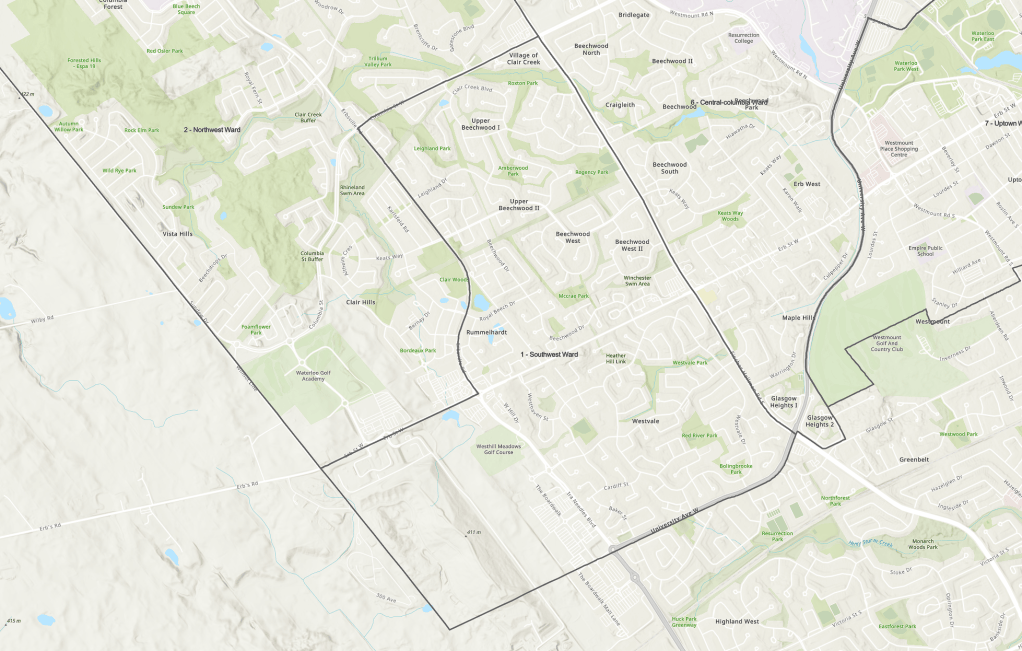
 Joel Botter | Candidate - Ward 1 City Council